
How to Evaluate a Carbon Fiber Composite Manufacturer: What Engineers and Procurement Teams Should Ask

Most composite manufacturing problems are not discovered at the RFQ stage. They surface at first article inspection, when tooling is already committed. Or during validation, when documentation gaps appear that no one flagged at intake. Or at production ramp, when a process that worked on three prototype units fails to hold tolerances at volume. By […]
Buyer’s Guide: Choosing Radiolucent Accessories for Imaging Workflows
Misorders that delay procedures, returns that consume purchasing team time, and accessories that pass receiving inspection but underperform in the imaging environment they were purchased to support often trace back to the same gaps in the selection process.
How Medical OEMs Evaluate Composite Manufacturing Partners: What They Document and Why It Matters

Regulated medical device programs require OEMs to evaluate, approve, and periodically re-evaluate their suppliers against defined criteria.
Radiolucent Carbon Fiber: Common Misconceptions That Lead to the Wrong Purchase

Clinical and procurement teams specifying radiolucent OR accessories are not, in most cases, materials engineers.
Before You Order: OR Accessory Compatibility Checklist

At receiving, at installation, or in the OR suite when the accessory doesn’t perform as expected—these are the points where unresolved compatibility questions become delays, returns, and additional procurement cycles.
Carbon Fiber in Commercial Aviation Interiors
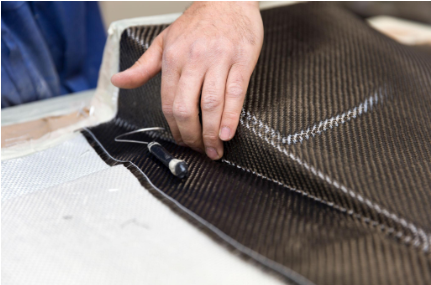
Commercial aviation interiors represent a significant carbon fiber application market driven by weight reduction pressure and premium design demand. Here is what engineers and program managers need to know about structural and non-structural applications, FAA certification requirements, and lifecycle weight economics.
Managing Carbon Fiber Failure Risk
Composite programs fail in recognizable ways. Understanding the most common failure modes is the most practical guide to supplier evaluation and program structure that exists. Here is what goes wrong in carbon fiber programs and what an experienced manufacturer does to prevent it.
How to Write a Carbon Fiber Component Specification That Actually Works

Commercial aviation interiors represent a significant carbon fiber application market driven by weight reduction pressure and premium design demand. Here is what engineers and program managers need to know about structural and non-structural applications, FAA certification requirements, and lifecycle weight economics.
The Difference Between a Pre-Production Sample and a Prototype in Composite Manufacturing

The terms prototype and pre-production sample are used interchangeably in many engineering and procurement conversations, and the confusion is usually harmless in industries where the manufacturing process for a prototype closely resembles the process for a production part
Common Misconceptions About Radiolucent Carbon Fiber
Carbon Fiber Is Not Automatically Radiolucent, and Assuming Otherwise Leads to Expensive Purchasing Mistakes