
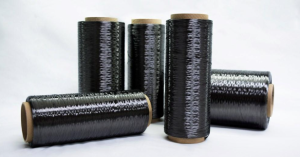
The terms prototype and pre-production sample are used interchangeably in many engineering and procurement conversations, and the confusion is usually harmless in industries where the manufacturing process for a prototype closely resembles the process for a production part. In composite manufacturing, where the tooling, layup process, cure cycle, and inspection protocol all affect the structural and dimensional outcome of the part, the distinction is not harmless. A prototype built on soft tooling using an approximate layup process does not validate the production process. A pre-production sample built on production tooling using the validated production process does. Treating one as though it delivers the information the other provides leads to first article failures, re-qualification cycles, and the schedule and budget consequences that follow. Contact our engineering team through our contact page to discuss what type of part your program actually needs at its current stage.
A prototype in composite manufacturing is a part produced to evaluate design intent, not to validate the production process. Its purpose is to answer questions about geometry, fit, function, and structural behavior at a stage when the answers are still being used to inform the design. A prototype may be built on soft tooling, machined from a block, or produced using a process that approximates but does not replicate the intended production process. It does not need to be produced by the validated production process because its purpose is to evaluate whether the design is right before the investment in production tooling and process validation is made. CMI’s engineering team can rapidly prototype and thoroughly evaluate designs before moving to the next phase, using prototype tooling across a diverse range of materials selected to match each specific application, as confirmed on our composite solutions page. At the prototype stage, the right question to ask is: does this design do what it needs to do? The prototype is the tool for answering that question.
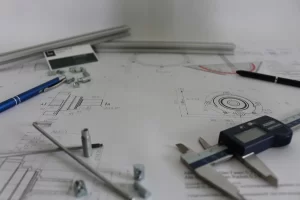
A pre-production sample is a part produced on production tooling using the intended production process to validate that the process produces a conforming part before full production begins. Its purpose is to answer questions about the manufacturing process, not the design. A pre-production sample is produced using the same tooling, layup sequence, cure cycle parameters, and inspection protocol planned for subsequent production units.
If the pre-production sample conforms to the drawing, the process is validated to produce conforming parts. If it does not conform, the nonconformance reveals a process problem that can be addressed before full production commits resources to a process that does not yet produce the required outcome. The pre-production sample is the tool for answering the question: does this process produce what the design requires? That question can only be answered after the design is fixed, the production tooling is built, and the process is defined. Attempting to answer it with a prototype produces the wrong answer.
In metal machining, a prototype produced on a CNC machine from the same material as the production part frequently does closely approximate the production outcome because the manufacturing process, material removal from stock, is essentially the same at prototype scale as at production scale. In composite manufacturing, the process that produces the part is inseparable from the properties of the part. The fiber architecture, layup sequence, cure cycle parameters, and consolidation method all directly influence the structural properties, dimensional outcomes, and surface condition of the finished composite part. A prototype built with soft tooling and an approximate layup may not accurately reflect the residual stress state, fiber volume fraction, or dimensional characteristics of a part produced using production hard tooling and a validated cure cycle. As a result, a composite prototype may help confirm design geometry and general structural behavior without necessarily demonstrating that the intended production process will consistently produce a conforming part.
Understanding that distinction is what separates programs that move cleanly from prototype to first article to production from programs that discover the gap at first article production. Our composite prototyping blog describes how CMI structures the prototyping process, and our engineering team is available through our contact page to discuss where your program is in the prototype-to-production sequence.
A well-structured composite manufacturing program moves through a defined sequence of deliverables, each designed to answer the specific questions appropriate to its stage:
Programs that skip or compress the pre-production sample stage frequently discover at first article that the production process requires adjustment, at which point the re-qualification cost is substantially higher than the cost of the pre-production evaluation would have been. Our program timeline page describes how CMI structures each stage of the composite program lifecycle.
Understanding what each deliverable is designed to address, and sequencing them appropriately within the program timeline, can help reduce the risk of first-article failures, requalification cycles, and the resulting impacts on schedule and budget.
CMI’s engineering team supports programs at every stage of the prototype-to-production sequence, from early-stage concept evaluation through pre-production sample fabrication, first article inspection, and volume production. The starting point is a conversation about where your program is in that sequence and what the next deliverable should be. Contact our engineering team through our contact page or call 949-361-7580 to have that conversation, or review how CMI structures the full composite program lifecycle on our program timeline page.