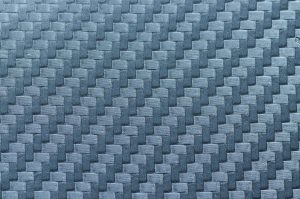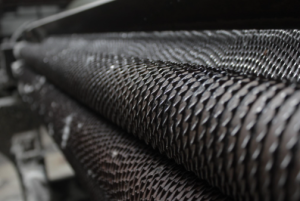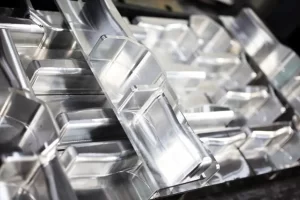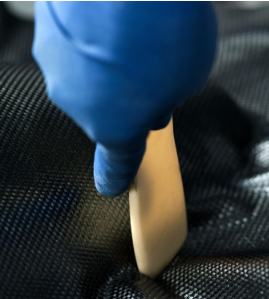
Medical and precision equipment systems operate in environments where small structural deviations can directly affect performance outcomes. Whether supporting imaging accuracy, surgical precision, or metrology alignment, these systems rely on materials that maintain stability under load, resist deformation, and remain consistent across repeated use cycles.
Carbon fiber composites have become increasingly important in these applications because they combine high stiffness, low weight, and functional advantages such as radiolucency and corrosion resistance. These properties enable the design of structures that remain stable during operation while also improving usability, imaging clarity, and system efficiency.
Improve structural precision and long-term performance with advanced carbon fiber design. Explore how engineered composite solutions can enhance stability in medical and high-precision equipment systems.
Why precision and medical systems depend on structural stability
In both medical and precision engineering environments, accuracy is not just a performance metric. It is a functional requirement. Small structural shifts can affect imaging quality, measurement reliability, or mechanical alignment.
Common challenges include:
- Structural deflection under load or patient/system weight
- Thermal expansion that shifts alignment or calibration
- Vibration from adjacent equipment or operational motion
- Cumulative mechanical stress over repeated cycles
These factors are especially critical in systems where repeatability and consistency matter more than peak strength.
Why carbon fiber is used in these environments
Carbon fiber is selected for medical and precision applications because it offers a balance of mechanical and functional performance that traditional metals often struggle to achieve simultaneously.
High stiffness with reduced weight
Carbon fiber maintains structural rigidity while significantly reducing mass. This improves handling in medical systems and reduces mechanical stress in precision assemblies.
Radiolucent behavior for imaging systems
In medical imaging applications, carbon fiber allows X-rays and other imaging signals to pass through with minimal interference, improving image clarity and reducing distortion. This makes it particularly valuable in CT, X-ray, and imaging-guided surgical environments. (rgcarbonfiber.com)
Dimensional stability under load
Low deformation under mechanical stress helps maintain alignment in precision systems where even small positional changes can affect outcomes.
Corrosion and sterilization resistance
Carbon fiber composites are commonly used in environments requiring frequent cleaning and sterilization because they resist corrosion and maintain structural integrity over time.
Where carbon fiber is applied in medical and precision systems
Carbon fiber is used across a wide range of structural and support applications where accuracy and reliability are critical.
Medical imaging systems
Carbon fiber is commonly used in patient tables, imaging platforms, and support structures because it minimizes interference with diagnostic imaging while maintaining strength and rigidity.
Surgical and clinical equipment structures
In operating environments, carbon fiber supports lightweight positioning systems, surgical tables, and instrument arms that must remain stable while allowing precise movement.
Precision alignment and metrology systems
Support frames and structural assemblies benefit from carbon fiber’s stiffness-to-weight ratio, which helps maintain calibration stability and reduces drift over time.
Robotics and controlled motion systems
In automated and robotic environments, reduced mass improves responsiveness while maintaining structural accuracy under repetitive motion cycles.
Engineering considerations when designing with carbon fiber
While carbon fiber offers clear advantages, performance depends heavily on how it is integrated into the system design.
Fiber orientation and structural directionality
Carbon fiber properties are directional. An incorrect layup design can introduce unwanted flexibility in critical load paths.
Interface and mounting design
Many alignment issues originate at connection points rather than in the composite structure itself. Interfaces must be designed to prevent stress concentration or deformation transfer.
Thermal behavior integration
Although carbon fiber generally has lower thermal expansion than metals, system-level behavior depends on the full material stack, including adhesives, fasteners, and adjacent components.
Manufacturing consistency
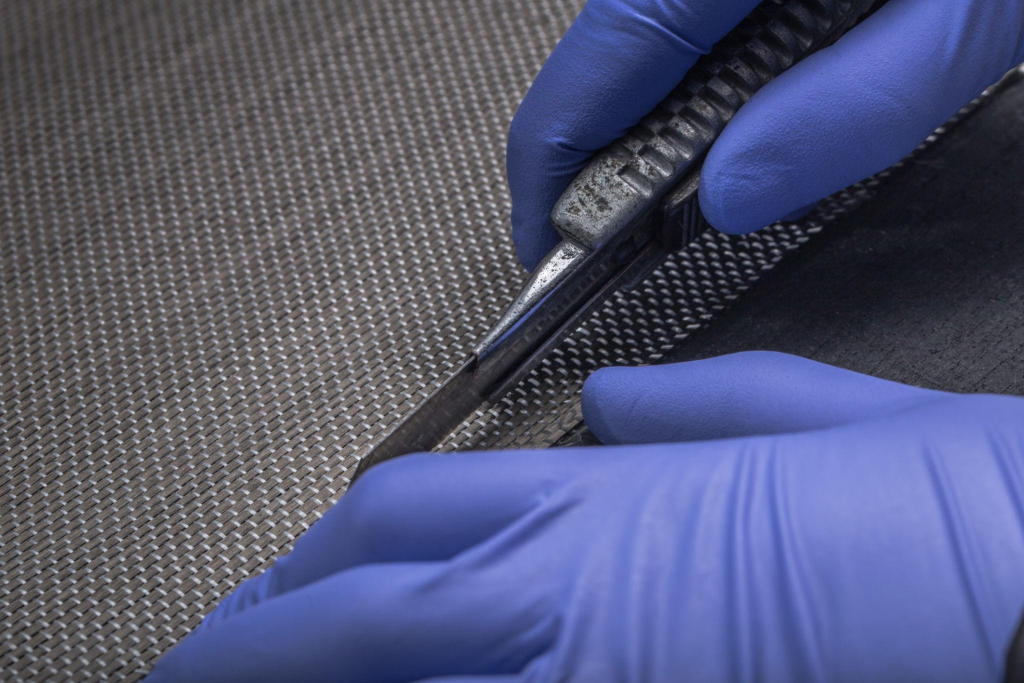
Variations in layup, curing, or machining can introduce small deviations that become significant in precision systems.
Why system-level thinking matters more than material selection
In both medical and precision equipment, material performance cannot be separated from system design. Carbon fiber improves structural behavior, but alignment accuracy and imaging quality depend on how well all components work together.
Common system-level risks include:
- Misalignment between structural and functional subsystems
- Incomplete modeling of load or thermal conditions
- Variability in assembly or manufacturing processes
- Lack of traceability in design decisions and changes
Because of this, structured engineering discipline plays a key role in achieving consistent outcomes.
Key takeaways
- Precision and medical systems require high structural stability and repeatability
- Carbon fiber reduces mass while maintaining stiffness and dimensional control
- Radiolucency is a major advantage in imaging-based medical environments
- Performance depends heavily on interface design and system integration
- Manufacturing and thermal consistency are critical to long-term accuracy
Final perspective
Carbon fiber is widely used in the structures of medical and precision equipment because it supports both mechanical stability and functional performance requirements. In imaging systems, it improves clarity. In precision systems, it improves alignment stability. Across both domains, it reduces unwanted deformation while enabling more efficient designs.
However, its effectiveness depends on disciplined engineering execution. Material selection alone is not enough to ensure performance in high-accuracy systems. Success comes from how well the structure, interfaces, and system integration are designed as a whole.
Improve structural precision and long-term performance with advanced carbon fiber design. Explore how engineered composite solutions can enhance stability in medical and high-precision equipment systems.