Why Cyclic Load Performance Matters More Than Static Strength
In many engineered systems, failure develops gradually through repeated stress cycles and continuous operational use. In these environments, fatigue behavior matters more than peak strength, making long-term performance consistency a critical factor in material selection.
Carbon fiber is often selected for long-duration systems due to its high strength-to-weight ratio and stiffness. However, its fatigue behavior is not simply a matter of “lasting longer” than metals. It depends heavily on how the material is designed, oriented, manufactured, and integrated into the system. When properly engineered, carbon fiber can deliver stable performance over extended cycles, with reduced deformation and more predictable structural response.
Alluvionic supports engineering teams in applying structured design and execution discipline to composite and high-performance systems. Through Project Assurance®, we help teams improve how requirements, load assumptions, and lifecycle expectations are translated into reliable engineering outcomes.
Request a capability discussion to explore how structured execution with Composite Manufacturing Inc can improve long-duration performance in your system design.
Why Fatigue Behavior Matters in Real-World Systems
Many systems do not fail during initial testing. They fail after extended use due to small inconsistencies that accumulate over time. This is especially important in environments where components are exposed to vibration, repetitive motion, or continuous mechanical loading.
In long-duration applications, fatigue performance directly impacts:
- Dimensional stability over time
- Maintenance intervals and service life
- System reliability under repeated operation
- Overall performance consistency
Unlike static load conditions, fatigue introduces gradual internal changes that may not be readily apparent early in development.
How Carbon Fiber Responds to Cyclic Loading
Carbon fiber behaves differently from metals under repeated stress. Instead of plastically deforming, it relies on fiber orientation and resin matrix behavior to distribute loads. This creates both advantages and constraints in fatigue-driven environments.
Directional Strength and Load Paths
Carbon fiber strength is highly dependent on fiber orientation. When loads align with fiber direction, fatigue resistance improves significantly. When loads are off-axis, stress transfers to the resin matrix, which can become the limiting factor over time.
Reduced Permanent Deformation
Compared to metals, carbon fiber structures typically exhibit lower permanent deformation under cyclic loading. This helps maintain alignment and system geometry across long operational periods.
Matrix-Driven Fatigue Behavior
While fibers provide strength, the resin system governs how loads transfer between fibers. Over time, micro-cracking in the matrix can influence performance, especially under high-cycle loading.
Where Long-Duration Fatigue Becomes Critical
Fatigue behavior is especially important in systems where operation is continuous or highly repetitive.
Motion-Control and Automation Systems
Robotic arms, actuators, and automated positioning systems rely on repeated motion cycles. Small deflections can accumulate and impact precision over time.
Rotational and High-Speed Components
Systems involving rotation introduce continuous cyclic stress. Imbalance or stiffness variation can amplify fatigue effects.
Structural Support in Dynamic Environments
Frames and support structures subjected to vibration or oscillating loads must remain stable without gradual alignment degradation.
Design Factors That Influence Carbon Fiber Fatigue Performance
Carbon fiber fatigue performance is not inherent; it is engineered. Several factors determine how well a component performs over long-duration use.
Layup Orientation Strategy
Fiber direction defines load distribution. Poor alignment can shift stress into weaker matrix regions, reducing fatigue life.
Resin System Selection
The resin controls energy transfer between fibers. Different resin systems respond differently to micro-cracking and environmental exposure.
Manufacturing Consistency
Small variations in curing, fiber placement, or void content can significantly affect long-term fatigue behavior.
Joint and Interface Design
Many fatigue failures occur not in the composite itself, but at interfaces where loads transition between materials or components.
Why Carbon Fiber Still Outperforms in Fatigue-Driven Applications
When properly engineered, carbon fiber offers several advantages in long-duration systems:
- Lower weight reduces inertial loading across cycles
- High stiffness maintains system geometry under repeated stress
- Directional reinforcement allows targeted load optimization
- Reduced creep compared to many polymer or metal systems
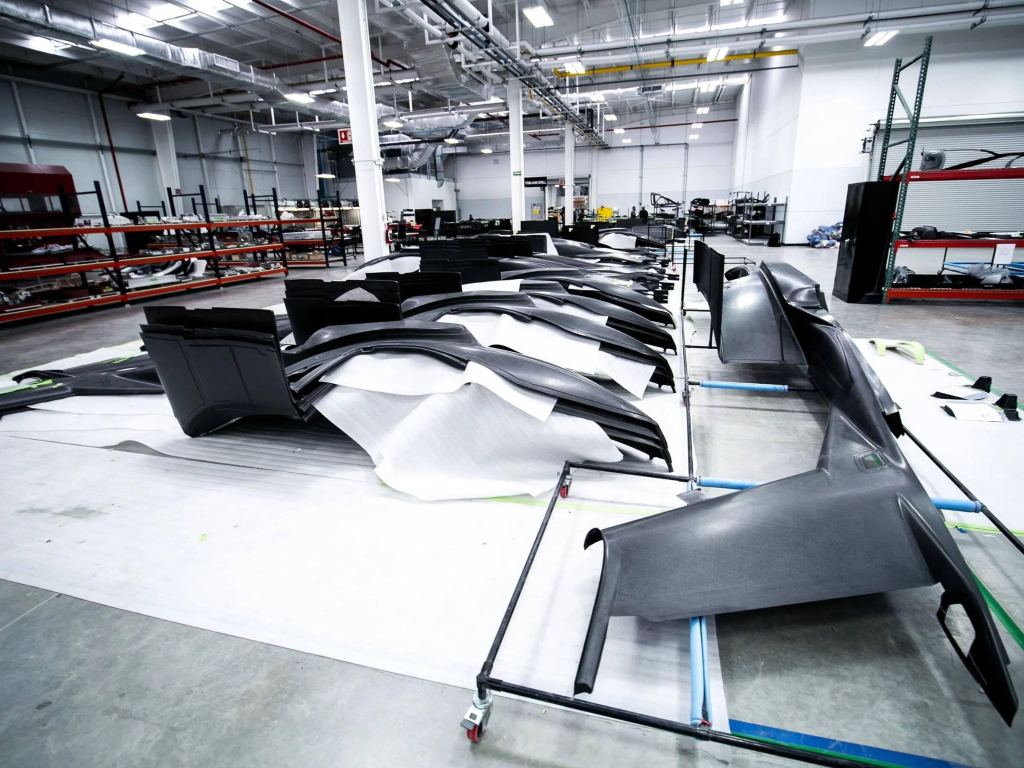
The key difference is not material selection alone, but how well the system is designed around the material’s behavior.
How Carbon Fiber Supports Long-Duration System Performance
Carbon fiber helps teams address complex performance requirements in applications where fatigue behavior, structural consistency, and long-term reliability are critical.
In high-performance systems, carbon fiber supports:
- Reduced structural weight without sacrificing stiffness
- Improved fatigue resistance under repeated load cycles
- Greater dimensional stability in demanding environments
- Enhanced vibration and resonance control
- Long-term performance consistency across precision applications
Its value becomes especially important in aerospace, medical, transportation, robotics, and other systems exposed to continuous operational stress over time.
Where Carbon Fiber Improves Fatigue Performance
Fatigue performance is often influenced by decisions made early in the engineering and material selection process. Carbon fiber provides advantages in applications where repeated stress, cyclic loading, and long-duration operational demands can gradually reduce system reliability.
When integrated correctly into the overall structure, carbon fiber can improve:
- Structural efficiency across repeated load conditions
- Stability between connected subsystem interfaces
- Resistance to long-term deformation and fatigue-related wear
- Precision retention in vibration-sensitive environments
- Overall system reliability during continuous operation
Its effectiveness depends not only on the material itself, but on how it is engineered into the complete system architecture.
Standards for engineering lifecycle consistency and material behavior are often guided by organizations such as the International Organization for Standardization (ISO), which defines frameworks for quality and structural reliability across industries.
Deliverables That Support Long-Term Performance
Depending on program needs, deliverables may include:
- Structured load and requirement documentation
- Fatigue-related design assumption tracking
- System integration and interface documentation
- Risk tracking frameworks tied to cyclic performance
- Engineering decision and rationale records
Each deliverable is designed to support long-term understanding and consistency of the system.
Focused on Reliability, Not Just Performance
Carbon fiber systems succeed in long-duration environments when fatigue behavior is understood, documented, and integrated into design decisions. Without that structure, even high-performance materials can underperform over time.
Request Carbon Fiber Engineering Support
If your system involves long-duration or cyclic loading conditions, we can help identify where structural and coordination improvements can improve fatigue performance.
Request a capability discussion to explore how structured execution can improve reliability in your design.
Talk to an engineer about your system requirements and constraints. We will help identify where improved structure can support more consistent long-term performance.