Radiolucent Carbon Fiber
Carbon Fiber Is Not Automatically Radiolucent, and Assuming Otherwise Leads to Expensive Purchasing Mistakes

Carbon Fiber Is Not Automatically Radiolucent, and Assuming Otherwise Leads to Expensive Purchasing Mistakes

The medical device supplier relationship is one of the highest-stakes vendor decisions an OEM makes, and it is frequently made on the basis of the least reliable information: a supplier’s own capability statements, a tour of a clean facility, and a competitive quote.

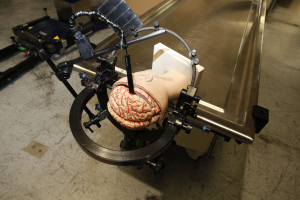
Surgical Robotic Platforms Demand More From Structural Materials Than Almost Any Other Medical Application

Many composite program failures stem from process, supplier, or execution issues rather than material selection alone.

Medical device OEMs evaluating carbon fiber composite components are not only choosing a material; they are choosing a manufacturing partner capable of meeting the documentation, quality, and performance requirements of a regulated industry.

Medical device OEMs evaluating carbon fiber composite components are not only choosing a material; they are choosing a manufacturing partner capable of meeting the documentation, quality, and performance requirements of a regulated industry.

Every composite manufacturer provides a list of capabilities covering fiber types, manufacturing methods, and industry experience.

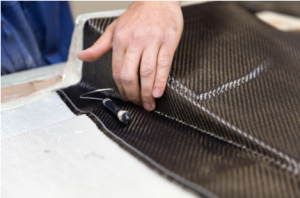
Carbon fiber is often described as a single material, but finished carbon fiber components are actually composite structures made from multiple elements.

Understand the key differences between build-to-print and turnkey composite manufacturing.
In this blog, you’ll find in-depth content about carbon fiber medical devices, composite surgical instruments, and custom carbon fiber prosthetics. From radiolucent carbon fiber imaging tables to carbon fiber wheelchair components, we cover the latest advancements in lightweight and durable composites for modern healthcare solutions. Our content addresses innovations in composite materials for surgical robotics, diagnostic instruments, and regenerative medicine, providing insights into how carbon fiber is transforming the medical industry with its high-strength, sterilizable, and corrosion-resistant properties.
Beyond healthcare, our blog delves into the expanding role of carbon fiber for industrial use, engineering solutions, and automated systems. Discover how fiber-reinforced composites are enhancing robotics, automation, and manufacturing processes. We also explore cutting-edge developments in carbon fiber military applications, including ballistic panels, armor systems, and UAV components, as well as innovations in carbon fiber for shipbuilding, marine composite materials, and yacht components. These lightweight composites offer unmatched strength, precision, and resistance for even the most demanding environments.
This blog is also a resource for professionals and engineers looking to understand composite material selection, finite element analysis, and composite mechanical testing. Our articles explain the fundamentals and applications of advanced composite materials in mechanical design, composite prototyping, and design optimization. Whether you’re working with composite orthotics, composite helmets for healthcare, or high-strength structural components, you’ll find expert insights into composite stress analysis, fatigue analysis, and fracture toughness that help you make better decisions when working with carbon fiber and composite materials.