
Tooling & Mold Development for Carbon Fiber Composites
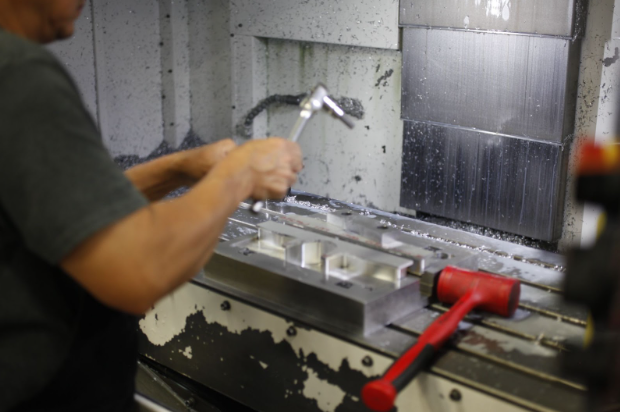
At CMI, we know carbon fiber programs gain or lose momentum at the tooling stage. Teams often arrive with a finished part design and an aggressive launch schedule, only to realize that mold development drives cost, timing, and long-term repeatability.
That’s why we handle tooling and mold development for carbon fiber composites in-house. By keeping tooling under one roof, we remove uncertainty, shorten feedback loops, and deliver molds designed for real production—not just a successful prototype.
Partner with CMI to get the right tooling and mold development for your team. We have everything you and your team need to get things up and moving.
Get In Touch With Us
Why Tooling Determines the Success of Composite Programs
Composite parts require precision long before the first ply touches the tool. The mold determines fiber alignment, surface finish, and dimensional stability. When teams rush tooling or outsource it to multiple vendors, they often encounter rework, schedule delays, and inconsistent part quality.
At CMI, we treat composite mold making as a core engineering discipline. We start evaluating tooling strategy early in the process, before any material gets cut.
A well-designed tool protects both budget and schedule. Reliable molds reduce scrap, prevent requalification cycles, and enable scale without redesign. When customers evaluate suppliers, confidence grows when one partner owns tooling from concept through validation.
What Teams Gain from In-House Carbon Fiber Tooling
When tooling, engineering, and production teams work together every day, decisions stay grounded in manufacturing reality. At CMI, engineers collaborate directly with machinists and technicians throughout the process.
This approach creates several advantages:
- Lead times remain predictable because we don’t rely on outside tool queues.
- Iteration happens faster because design changes connect directly to the shop floor.
- Production ramps more smoothly because tools already reflect real manufacturing conditions.
We also design tools for durability and thermal stability. Stable molds maintain tolerances across repeated cycles, which allows programs to move from prototype to production without reinventing the process.
The CMI Tooling Workflow
We follow a structured workflow that keeps projects organized and reduces surprises for decision-stage buyers.
Design
Our engineers translate part requirements into a complete tooling concept. We model tool geometry, define parting strategies, and integrate vacuum or heating features when required.
We also review designs with production and quality teams to ensure the tool supports consistent manufacturing from day one.
Because we handle tooling and custom composite part production in-house, we are also able to work with designers to ensure both the tools and parts themselves are designed with your manufacturing needs in mind.
Build
Our machinists and technicians fabricate tools using CNC machining, precision hand finishing, and specialized surface treatments. Throughout the build process, we verify geometry and surface quality at key checkpoints.
We document each stage so customers can maintain traceability and receive future maintenance support.
Validation
Validation confirms that the tool performs in real production conditions. We run trial parts, measure critical features, and confirm demolding and cycle time.
Because our design and manufacturing teams share the same facility, we resolve adjustments quickly. Once performance meets the specifications, we complete validation and obtain documented approval for production use.
A Practical Approach to Composite Mold Making
Effective composite mold making balances design intent with manufacturing realities. Tool material selection affects cost, cycle time, and production volume. Surface finish requirements influence machining strategy and coatings. Draft angles and parting lines affect demolding and long-term tool life.
At CMI, we evaluate these factors early. Our engineers review part geometry, laminate schedules, and cure profiles before recommending a tooling approach.
Depending on the program, we may build tools from:
- Aluminum
- Steel
- Composite tooling materials
Each option comes with tradeoffs in cost, durability, and thermal performance. We walk customers through those tradeoffs so they can make informed decisions.
Managing Risk During Tooling Development
At CMI, we manage tooling risk through transparency and early validation. When assumptions exist, we identify them early and propose ways to test them.
In some cases, we recommend prototype or soft tooling to validate geometry before committing to hardened production tools. We also run material coupons and trial cures to confirm behavior under heat and pressure.
We also maintain strict change control. If a design revision appears, we evaluate its impact before cutting metal and present clear options with cost and schedule implications.
Connecting Tooling to Production
A tool only delivers value if production runs smoothly. That’s why we design tooling alongside manufacturing processes.
We integrate vacuum routing, heating elements, and handling features that align with shop workflows. During validation, operators train directly on the production tools, which shortens ramp-up time.
We also plan for long-term maintenance. Replaceable wear components, durable surfaces, and documented care routines extend tool life and keep programs running reliably.Why Teams Choose CMI
At CMI, we combine engineering expertise with practical manufacturing experience. Because we manage tooling in-house, we eliminate the handoffs that often slow projects down.
Our teams communicate daily, resolve issues quickly, and keep programs moving forward.
Customers gain a partner who takes ownership—from the first tooling concept to validated molds and full-rate production.
A Confident Path Forward
Tooling and mold development should advance composite programs, not hold them back. At CMI, we build carbon fiber tooling and composite molds that support repeatability, quality, and long-term scalability.
Our structured workflow, transparent timelines, and practical design approach keep projects on track from concept through production.
When teams compare suppliers, they often look for a partner who controls tooling internally and aligns every decision with manufacturing success. At CMI, that’s exactly how we work: we have something that will work for every team.