

The most avoidable and recurring challenges in composite manufacturing programs often arise when design and manufacturing are treated as separate processes. A design team that finalizes geometry without manufacturing input commits to features that create tooling problems, fiber bridging issues, or dimensional outcomes the production process cannot consistently achieve. Those problems are discovered at prototype or first article, when tooling is already built and the cost of correction is substantially higher than it would have been with a DFM review at the design stage.
Working with a manufacturing partner whose design engineers, tooling fabricators, and production team operate under one roof means those problems surface during design review rather than at first article. The benefit is a design that moves through prototyping, pre-production sample, and first article more cleanly — with fewer re-qualification cycles and less tooling rework — because the manufacturing constraints were built into the design from the beginning rather than discovered after the tooling investment was made. CMI handles design, prototyping, and manufacturing in-house, with the engineers who designed the molds working alongside the fabricators from the beginning of every program, as confirmed on our composite solutions page. Contact our engineering team through our contact page or call 949-361-7580 to discuss your composite design and prototyping program.
CMI’s design engineering capability supports composite programs from the earliest concept stage through production-ready design documentation. The capability spans CAD/CAM/CIM design, stress analysis and structural evaluation, design-for-manufacturability assessment, mold design, and the translation of design intent into the manufacturing process specifications that govern production. CMI uses a seamless integration of CAD/CAM/CIM, stress analysis, mold design, fabrication, assembly, and quality inspection, as confirmed on our composite solutions page. This integration means that design decisions are evaluated against manufacturing constraints in real time rather than discovered during tooling fabrication or prototype evaluation. For programs where the customer provides a finished design package, CMI’s design engineering team conducts a design-for-manufacturability review to identify features that could create manufacturing difficulty and recommends modifications before tooling is committed. For programs where the customer is still developing the design, CMI’s engineering team can contribute to the design process from initial concept, helping ensure that the design evolves toward a geometry that can be manufactured consistently and cost-effectively. More detail on our in-house design engineering capability is available on our in-house design and engineering page and our DFM service page.
Prototype fabrication at CMI uses in-house prototype tooling fabricated by the same engineering team that designed the molds, ensuring that the tooling accurately reflects the design intent and that any dimensional or geometric issues are caught before production tooling is committed. CMI’s engineering team creates prototype tooling using a diverse range of materials, carefully selected to match each specific application, and uses these resources to rapidly prototype and thoroughly evaluate designs before moving to the next phase, as confirmed on our composite solutions page. The prototype phase evaluates design geometry and fit, confirms structural behavior under load, identifies any design features that require modification before production tooling is committed, and provides the customer with a physical part that can be evaluated in the intended assembly or application. CMI can structure prototype programs as standalone engagements for customers who need to evaluate a design before choosing a manufacturing partner for production, or as the first stage of a prototype-to-production program where CMI carries the design through to volume production.
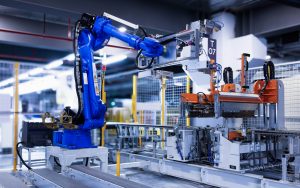
CMI fabricates tools in-house, which means the engineers who design the part also design the tooling, and the engineers who design the tooling work alongside the fabricators who build it. This engineering continuity reduces the dimensional translation risk that arises when design and tooling are separated between organizations. A critical part of CMI’s competency is this in-house tool fabrication capability, where the engineers who design the molds work side by side with the fabricators, minimizing opportunities for misinterpretation and supporting the goal of meeting the specification, as confirmed on our composite solutions page. For production programs, in-house tooling also means that tooling modifications go through the same engineering review process that governed the original design rather than being managed as a separate vendor relationship. And for programs where tooling condition affects part dimensional stability over a production run, in-house tooling maintenance keeps the condition of the tool within the same quality system that governs production conformance. More detail is available on our in-house design and engineering page.
CMI supports composite programs across the full lifecycle from initial design concept through volume production, with all critical activities handled in-house under a single engineering and quality framework:
This full-lifecycle capability under one roof means that the engineering knowledge built during the design and prototype phase carries directly into the tooling and production phase, without the re-learning and re-translation that occurs when design and manufacturing are separated between organizations. Our program timeline page describes the full lifecycle structure in detail.
CMI’s vertically integrated design and prototyping capability, with design engineering, in-house tool fabrication, and prototype and production manufacturing all operating under one roof and one engineering team, supports keeping design decisions aligned with manufacturing reality from the earliest concept stage through volume production. The problems that arise from separating design and manufacturing are real and recurring in composite programs: DFM issues discovered after tooling is committed, dimensional translation errors between design and tooling, and prototype results that do not predict production performance. CMI’s integrated approach addresses each of those risks at the stage where they are cheapest to resolve. Contact our engineering team through our contact page or call 949-361-7580 to discuss your composite design and prototyping program, or review how CMI structures the full composite program lifecycle on our program timeline page and our custom composite engineering page.