
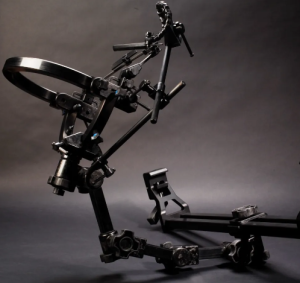
Carbon fiber performs well in some radiation environments and requires careful evaluation in others. The distinction matters because material selection that works in radiation therapy equipment — where radiolucency is a primary requirement and dose levels are well characterized — does not automatically carry over to nuclear facility applications, where higher cumulative doses and different performance requirements create a different evaluation framework. Understanding what composite actually offers in each environment, and where the limits of the thermoset matrix require program-specific assessment, is the starting point for any responsible design decision.
Engineering carbon fiber components for a radiation or nuclear application?
CMI’s engineering team has over four decades of experience with radiolucent composite design and can help evaluate your application-specific requirements.
Radiation Therapy Equipment: Radiolucency as a Primary Requirement
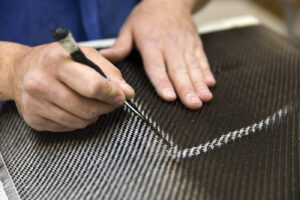
Radiation therapy equipment—treatment couches, patient positioning systems, beam path structural components—places a specific, well-understood set of demands on structural materials. The component must support patient loads and maintain dimensional stability over repeated treatment sessions while allowing the treatment beam to pass through with minimal interference. Metallic structural materials introduce attenuation and scatter that interfere with beam delivery. Carbon fiber composite offers stiffness, low density, and minimal X-ray attenuation, so it is widely used for structural components in the beam path.
These applications also benefit from the same design discipline that CMI has applied to medical imaging components for over four decades. Fiber architecture, laminate design, and hardware interface management all affect imaging performance. CMI’s experience producing radiolucent composites for medical device applications — including neurological surgery, interventional procedures, and imaging-adjacent structural parts — applies directly to radiation therapy structural components where radiolucency and dimensional stability are primary requirements. Unreinforced polymers often lack the stiffness required for patient load-bearing applications in the beam path. Review how CMI’s surgical table accessories are designed for imaging transparency as a reference for this design philosophy in practice.
Nuclear Facility Applications: Different Criteria, Different Risks
Carbon fiber’s corrosion resistance, non-magnetic properties, and weight reduction advantages make it worth considering for tooling, structural, and handling applications in nuclear facilities. These properties can offer meaningful advantages over metal alternatives in specific contexts. Carbon fiber composite does not, however, make it suitable for all nuclear facility applications without design evaluation. The cumulative dose environment, the mechanical demands of the specific application, and the service life of the component all require program-specific assessment before carbon fiber is specified.
The distinction between radiation therapy and nuclear facility environments is cumulative dose. Radiation therapy dose levels are well characterized, and the resin systems used in treatment equipment are selected and validated for that dose range over the service life of the component. Nuclear facility applications can involve higher cumulative doses over longer service lives, which requires application-specific evaluation of resin stability rather than reliance on general composite performance data. CMI’s custom composite engineering process includes this evaluation at program intake for applications where cumulative dose is a design parameter.
How Ionizing Radiation Affects Composite Materials
Long-term exposure to ionizing radiation can alter the thermoset resin matrix through chain scission and crosslinking. These molecular-level changes can affect the mechanical properties of the matrix over cumulative dose — stiffness, toughness, and the fiber-matrix interface that governs load transfer between the fibers and the resin. The carbon fibers themselves are generally more radiation-stable than the matrix, but the overall performance of the composite depends on all three elements: the fiber, the matrix, and the interface between them.
The practical implications for design are specific:
- Resin system selection matters for radiation-exposed applications. Not all thermoset systems have the same radiation stability, so use resin-specific data in design evaluations rather than general composite performance references.
- Calculate cumulative dose over the intended service life and use it as a design input, not as a background condition.
- Dose levels in radiation therapy are well characterized and generally fall within ranges for which validated resin systems exist. Nuclear applications with higher cumulative doses require program-specific evaluation with resin-specific radiation stability data.
Understanding these limits is not a reason to avoid carbon fiber in radiation environments. It is the basis for making informed material selections that will perform as expected across the full service life of the component. CMI’s in-house design and engineering team applies this evaluation framework to radiation-adjacent programs, and CMI’s manufacturing and assembly process supports the production controls that radiation-adjacent programs require.
How CMI’s Radiolucent Composite Experience Applies
CMI has been producing radiolucent composites for medical applications for more than four decades. That experience encompasses fiber selection for imaging transparency, laminate architecture optimization, production controls for regulated programs, and the documentation practices that medical and defense applications require. For radiation therapy structural components, this experience translates directly: the design considerations that govern imaging performance in surgical and interventional applications — fiber orientation, resin system selection, hardware interface management — are the same considerations that govern beam path transparency in radiation therapy equipment.
For nuclear facility applications, CMI’s in-house tooling design and manufacturing capabilities support custom geometries and tight tolerances that handling and structural components in these environments often require. Co-molding carbon fiber with metal interfaces is directly applicable to nuclear facility tooling and structural components where carbon fiber members must interface with metal hardware under controlled dimensional requirements. Explore CMI’s composite solutions for a full picture of the capabilities that may support radiation and nuclear applications.
Material Selection Requires Application-Specific Evaluation
Carbon fiber composites have well-documented advantages in radiation environments, most clearly in radiation therapy equipment, where radiolucency and dimensional stability are primary requirements and dose levels are well characterized. Those advantages are real, and they are the reason carbon fiber is the standard structural material for beam path components in radiation therapy. But they do not automatically qualify carbon fiber for every radiation-adjacent application without the engineering evaluation that each application’s specific dose environment, service life, and mechanical requirements demand.
The resin matrix’s behavior under high cumulative ionizing dose is the parameter that requires the most careful evaluation in nuclear applications. Designing around that parameter — through resin system selection, service life analysis, and application-specific testing when required — is engineering work that needs to happen at the design stage, not after a component is in service. Carbon fiber composite is the right material for many radiation environments. Confirming that it is the right material for a specific environment means doing the application-specific evaluation that each environment requires. CMI’s engineering team is available to work through that evaluation with you. Contact us through the contact page to start that conversation.
Not every radiation environment is the same. The evaluation should match the application.
Contact CMI’s engineering team to discuss the specific requirements of your radiation or nuclear composite program.