
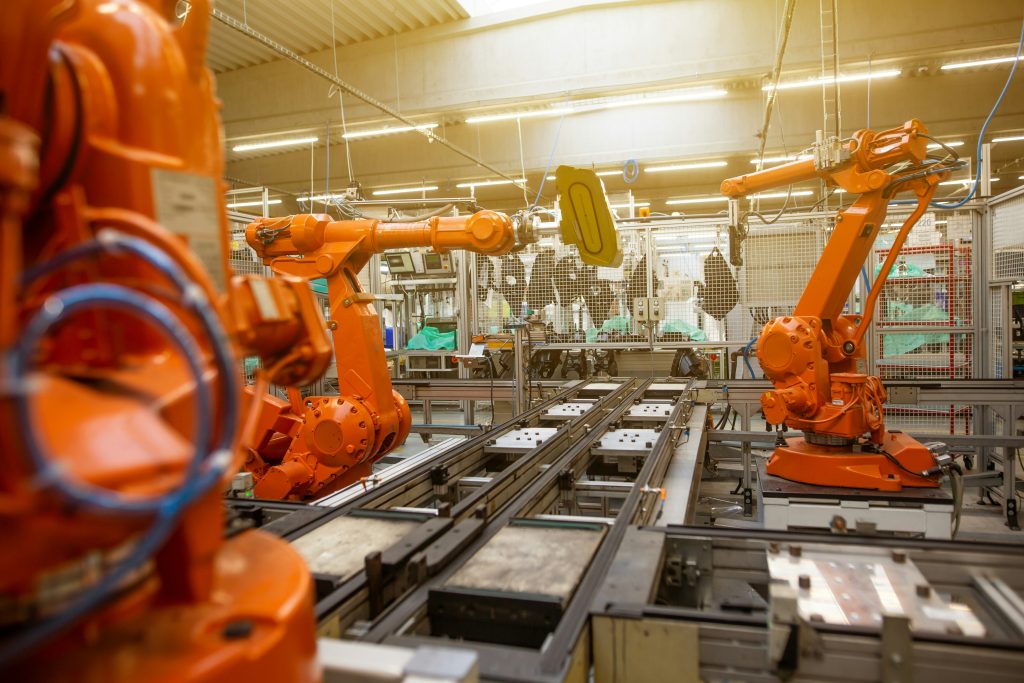
In high-performance industries such as aerospace, medical devices, defense, robotics, industrial automation, and transportation, carbon fiber components must be engineered with absolute precision.
These parts operate where strength, reliability, and consistency matter most. A small defect, such as an air pocket, fiber misalignment, surface irregularity, or incorrect cure cycle, can compromise performance or lead to catastrophic failure.
At Composite Manufacturing Inc. (CMI), quality control is built into every stage of production. From initial engineering and tooling to molding, machining, assembly, and testing, experienced technicians and engineers oversee each step.
With nearly 40 years of expertise and a fully integrated environment, CMI delivers carbon fiber components that meet exact performance requirements and strict industry standards.
Explore Carbon Fiber Solutions Built for High-Performance Manufacturing. See how vertically integrated production improves quality, consistency, and speed across aerospace, industrial, and consumer applications.
One of the defining strengths of CMI’s process is its vertical integration. Instead of outsourcing design, tooling, prototyping, or machining, the company performs all major production stages under one roof.
This tight control enables greater visibility, faster problem-solving, and consistent quality from the first prototype to high-volume manufacturing.
Vertical integration allows CMI to control:
This closed-loop process eliminates many of the variables and inconsistencies that occur when a part passes through multiple vendors. It also ensures that every component is built with the same precision expected from mission-critical equipment.
Quality control starts in the design phase, long before material is cut or fiber is laid. CMI’s engineering team uses advanced design tools and deep composite expertise to ensure the final product will meet requirements for load, stiffness, durability, geometry, ergonomics, and long-term performance.
Engineers develop precise 3D CAD models, define tolerances, specify composite materials, and establish layup strategies that determine fiber orientation and structural behavior. Detailed digital planning ensures that each part can withstand expected forces, weight limits, and environmental conditions.
Before moving into production, CMI builds prototypes to validate fit, structural performance, and manufacturability.
Engineers review:
This step prevents costly issues later and ensures that production molds and tooling match the exact needs of the design.
CMI fabricates its own molds and tools in-house, ensuring they meet high standards for durability, finish quality, dimensional accuracy, and temperature stability. High-quality tools produce high-quality parts, especially in large production runs where consistency matters.
With a 26,000-square-foot facility dedicated to composite manufacturing, every step of production is controlled to maintain consistency and structural performance. Carbon fiber components are only as strong as the precision of their layup, curing, and finishing.
CMI manages material storage and handling to maintain fiber integrity and prevent contamination. This includes climate-controlled storage, clean-area layup environments, and careful tracking of material batches.
During hand layup or prepreg (pre-impregnated fiber material) placement, technicians follow detailed ply books (instruction guides detailing each fiber layer) that specify fiber angles, orientations, and sequence.
Precision here ensures:
With experienced technicians and meticulous layer-by-layer documentation, CMI maintains consistent structural performance across all parts.
Whether using prepreg (pre-impregnated with resin) or wet layup techniques (adding resin to dry fabric at the time of layup), controlling resin content is critical.
Uniform resin distribution prevents:
Automated equipment and strict process controls ensure optimal resin-to-fiber ratios (the correct balance of resin and carbon fiber) throughout all components.
Using autoclaves or controlled ovens, CMI executes precise curing cycles that determine the final material properties. Temperature, pressure, and dwell times are monitored throughout the cycle to ensure the part cures uniformly and reaches full strength.
This rigorous curing control prevents:
Fully documented cure cycles (records of the temperature, pressure, and time parameters during resin hardening) allow complete traceability for every production batch.
After molding, parts undergo CNC machining and finishing to achieve the final shape, mounting surfaces, and component integration.
CMI’s machining capabilities ensure that dimensions, edges, holes, and interfaces match engineering requirements exactly. With carbon fiber, machining requires careful control to prevent fraying, delamination, or micro-cracking. Experienced technicians and precision equipment ensure clean edges and tight tolerances.
Many carbon fiber products incorporate metal hardware, mechanical interfaces, hinges, brackets, or other components. CMI handles assembly in-house, checking for:
Integration by the same team that built the part ensures seamless performance.
Throughout manufacturing, checkpoints verify:
This layered approach ensures that no part advances to the next stage without meeting the required standard.
CMI validates every part through mechanical testing, performance simulation, and final inspection to ensure operational reliability.
Tests may include:
These assessments confirm that the composite behaves as engineered and can survive real-world conditions.
Depending on the application, parts may be exposed to:
Such testing ensures long-term product performance, not just initial strength.
Before leaving the facility, each part passes through a comprehensive review to verify that:
This final step ensures that the part delivered meets the reliability standards expected by aerospace, medical, defense, and industrial customers.
CMI produces parts for sectors where reliable composite performance is essential.
Carbon fiber offers radiolucency (the ability to allow X-rays to pass through), chemical resistance, and an excellent strength-to-weight ratio. These properties are crucial for imaging systems, positioning devices, surgical tables, and specialized tools.
Weight savings, high stiffness, and fatigue resistance are essential for aircraft systems, UAV components, and protective structures, all of which require exceptional quality control.
Automation systems rely on components that are lightweight, wear-resistant, and dimensionally stable. Consistent composite performance ensures predictable long-term operation.
From early concepts to high-volume orders, consistent quality ensures performance at every stage of product development.
At Composite Manufacturing Inc., quality control is the foundation of the manufacturing process. Through decades of experience, vertical integration, in-house tooling, precise layup and curing, advanced machining, and rigorous testing, CMI ensures every carbon fiber part meets the demanding requirements of modern technology and industry.
Whether serving aerospace missions, supporting medical advancements, strengthening defense systems, or powering next-generation robotics, CMI’s commitment to quality ensures that every product is reliable, consistent, and ready for real-world performance.
Talk With Our Engineering Team About Your Next Build. Get expert guidance on materials, manufacturing methods, and fully integrated carbon-fiber production capabilities.